
Industries
Senior Living Community Cleaning in Vallejo
Vallejo senior living communities get their lobbies, lounges, dining rooms, hallways and staff spaces cleaned at an unhurried pace that works around mealtimes and resident programs.
Printable checklist
Where residents spend their day
Senior housing in and around Vallejo takes several forms: independent-living apartment buildings, assisted-living and memory care communities, and active-adult clubhouses tucked into residential neighborhoods. In every one of them, the shared rooms double as the residents’ living room, dining room and front porch.
That changes how cleaning should feel. Vallejo Janitorial plans the work so crews move steadily and quietly through the building, leave furniture exactly where residents expect it, and finish each room before the next activity or meal begins.
Front lobby, reception and visitor areas
Families form their view of a community the moment they walk in, so the entrance gets close attention on every visit. Entry glass and door push plates are polished, mats are vacuumed and shaken out, the reception desk and sign-in station are wiped, and lobby seating has its arms and cushions cleaned. Artificial plants, picture frames and the tops of display cabinets are dusted by hand.
Public restrooms near the lobby are cleaned and disinfected, and paper towels, tissue and hand soap are refilled using supplies we bring or the ones already on your shelves. Elevator cabs, call buttons and the grab bars along the walls get a wipe on the same pass.
Dining room and servery
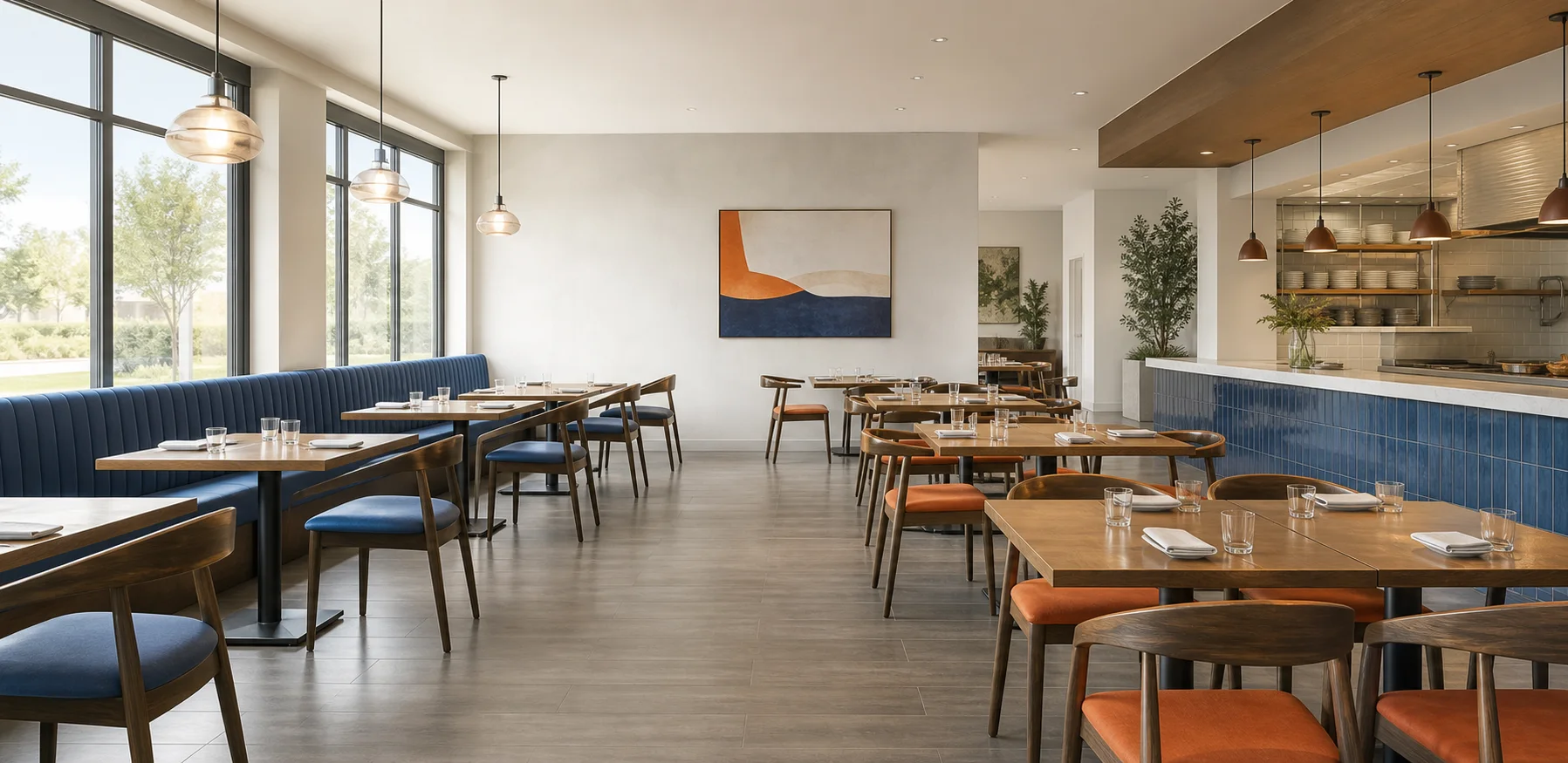
The dining room carries the heaviest load of any shared space. After the evening meal, crews wipe tables, clean chair seats, backs and arms, vacuum crumbs from upholstered chairs and pick up dropped food from under the tables. Carpet is vacuumed, hard floors are cleaned with a product that leaves no slick film, and the private dining room is reset for the next family gathering.
The servery’s counters, beverage station and sneeze guards are wiped, and the stretch of floor along the service line gets an extra scrub where spills land. For communities that serve three meals a day, a midday visit can bring the room back between lunch and dinner.
Lounges, activity rooms and the library
Activity rooms see crafts, card games, exercise classes and movie nights in a single week. Tables are cleared of glue and paint marks, chairs are wiped, puzzle and game shelves get a dusting, and the floor is brought back to clean. The library, chapel, theater room and sitting areas on each floor get their furniture, lamps and window sills dusted and their carpet vacuumed.
Long corridors deserve as much attention as the rooms they connect. Handrails are wiped from end to end, door frames and kick plates are cleaned of scuffs, and the carpet or vinyl underfoot is maintained so the hallway looks fresh to a resident heading to lunch. Hallway carpet can be extracted wing by wing through our commercial carpet cleaning service.
Staff rooms and administrative offices
The people who run a community need clean space too. Break rooms have their tables, microwaves, refrigerator doors and sinks cleaned, the administrator’s office and marketing office are dusted and emptied, and staff restrooms and locker areas are kept in order. Shared desks and phones in the business office are wiped on each visit.
Vinyl and tile in service corridors and staff areas are good candidates for a periodic machine scrub, or a strip and fresh finish from our floor care crew, done in sections so a route through the building always stays open.
Pacing the work around residents
Machine scrubbing and hallway vacuuming are kept to mid-morning and early afternoon, away from rest times; the dining room’s evening reset uses quiet tools near residents’ rooms. Wet floors are signed and dried before anyone walks across them, carts are parked out of the walking path, and cords never cross a hallway. Nobody on the crew starts work without a cleared background check, and supervisors return for quality inspections to see that the standard holds.
For communities with heavy visitor traffic on weekends, a day porter tends the lobby, public restrooms and dining room while families are visiting.
Shaping a schedule for your community
Two things set the size of the job: how many meals the dining room turns over each day and how much corridor carpet runs between wings.
Your executive director or facilities lead shows us the busiest rooms and the quiet hours, and the daily, weekly and periodic work each get their own frequency.
A few useful answers
Common questions.
What time of day does your crew clean the dining room?
After the evening meal for a nightly reset, with a midday visit between lunch and dinner added for communities that want the room refreshed twice.
How do you keep noise down while residents are resting?
Floor machines and hallway vacuuming run mid-morning and early afternoon, and quieter tasks such as dusting and wiping fill the hours around rest times.
Will crews move residents' chairs or belongings in the lounges?
No. Furniture goes back exactly where it was, and personal items are cleaned around.
Can break rooms and offices be added to the common-area route?
Yes. Break rooms, offices, locker areas and staff restrooms are added to the route, and each room gets its own checklist and frequency.
Can the chapel or theater room be cleaned ahead of a special event?
Yes. Book an added visit before a concert, a service or a family celebration, so the room is dusted, vacuumed and set before guests arrive.
Services